|
September 2013 |
21st Anniversary of the Senior Poets Laureate Poetry Competition |
The Diploemat--Inside Front Page |
Editorial: A Letter to Poets
Why Editors Don't Respond to Your Unsolicited Poems
|
 |
This letter has been reprinted numerous times since I first delivered it at the annual Missouri State Poetry Society convention after I became Contest Administrator of Senior Poets Laureate Poetry Competition. It appears here as my slightly modified swansong as co-founder/producer of the SPL. It serves two purposes: to explain what I believe about poetry, and to serve as an apology to those who send unsolicited poetry and never hear back from editors like me. Do submit, but only according to guidelines for publications or contests. After 21 years as SPL volunteer, I am taking a poetry sabbatical and am actively serving as Diploet (member of International Corps of Diplomatic Poets) as shown in this 9/4/13 photo by Reuters News Service. Join me?
Wanda Sue Parrott, Editor | 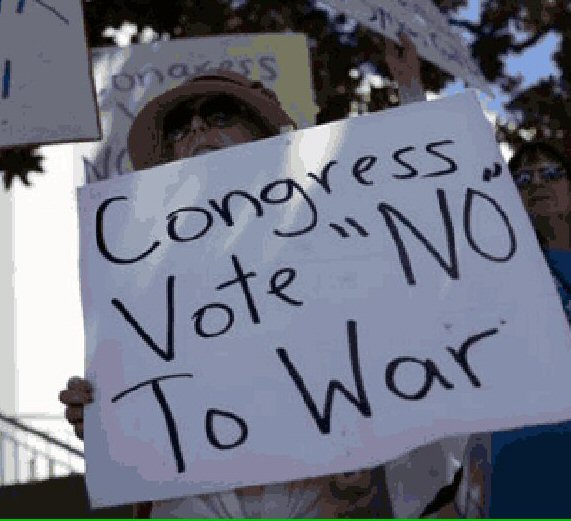 |
Dear Poets: Thank you for your interest in having your work read and critiqued. I am unable to do this, but will share some thoughts you may wish to consider.
First, there are two kinds of poetry. One is poetry from the heart. This is poetry that is intimate to the writer and it usually expresses one's feelings, often about love (or loss of love), death and God. Such poems are always perfect and are not the kinds of poetry one should subject to criticism. They are true poems because they are spiritual expressions from the individuals writing them. Second, there is poetry as a literary art--which is also a craft . Such poetry may be inspired by the heart, but it becomes a creation of the mind because one wants to work and rework it.
Under the category of First Poetry there exists only one kind of poem--regardless of length, style and rhyme scheme or lack of rhyme and meter. That is always an inner expression of truth, sometimes inspired by what we refer to as the Muse; others prefer Inner Self, God, Guardian Angel, or their opposites. It is twofold in nature. It is written out of a need that is of a healing nature, or that is inspirational and offers the opportunity for inner growth. This is what many call the Divine Essence or Word of God. As such, it is always good (beyond judgment) even if pain-filled. In technique, however, critics often consider such perfect expressions to be the work of poetasters, meaning non-craftspersons who are not yet true poets.
Second Poetry has many forms of expression, each with its own set of rules. This is like art. Some artists paint. Some sculpt. Some write verse. Others paint abstract word pictures. Such writers are craftspersons, poets in progress. If successful, a true poet might create from one to six great poems in a lifetime! Shakespeare beat those odds. Maybe you will break his record!
Most poets begin with rhymes. They may wind up crafting their work in free verse, which is not rhymed. Experimenting helps one discover the right style for his or her expression. Some poetry is metered--that is, has a rhythm. Other poetry does not. Imagery creates pictures. Metaphors are used so one thing stands for another. Simile likens one thing to another. These are parts of the techniques involved in creation of the second kind of poetry--that which is subject to review and critique, and which poems are products.
In order to separate the first kind of poetry from the second, one must first be willing to study, try, try again, and, second, put a lot of effort into the crafting. If one is not really interested in doing all the work, then it is not necessary and the writer should write from the heart only, but never ask others to give opinions. The first kind of spiritual expression should not be competitive; however, the second type is competitive, and writing such poetry is rather like an intellectual sport of the highest literary nature. The best way to develop the techniques mentioned is to join a group or poetry class, or get a good how-to-do-it book and pick one style that appeals, then practice it. This is capable of being critiqued because, from the outset, you want your product to be perfected--and criticism is not to be taken as deprecation of the Self. I encourage everyone to write the first kind of poetry, but discourage those who think they can make a living by writing the second kind because few poets earn enough to really call it income.
I am not discouraging you from writing poetry, for as Amy Kitchener says:A nation without poetry is a nation doomed to fail. However, I am unable at this time in my life to do poetry critiques, so please forgive me if you think I owe you a response to poems you sent without asking. I speak as a Diploet for editors in saying I might love your work; however, I might not, and it’s kinder to say nothing than to shatter your ego with truth or inflate it with false flattery. So, please…don’t send and, unless invited to do so, don’t ask. May the Muse be with you.
WSP